Growing demand for green gas – what Estonia’s new €15 million biomethane plant means for Latvia
This week, “Infortar” opened a biomethane plant in Pärnu, built with European Union support. By the end of this year, nearly a sixth of the gas consumed in Estonia will be of local origin – produced from cow manure and biological waste. The manure produced by a single dairy cow over a year is enough to produce around 200 kilograms of biomethane, which is enough to drive a vehicle 5,000 kilometers.
Biomethane is a renewable, or “green,” gas produced from manure, agricultural residues, and other biological waste. After purification, its properties are similar to natural gas, which means biomethane can be fed into the existing gas network and used for heating, electricity generation, or transport. Its main benefits are lower greenhouse gas emissions, more efficient use of waste, and greater energy independence, since the energy is produced from local resources, reducing dependence on imported energy sources.

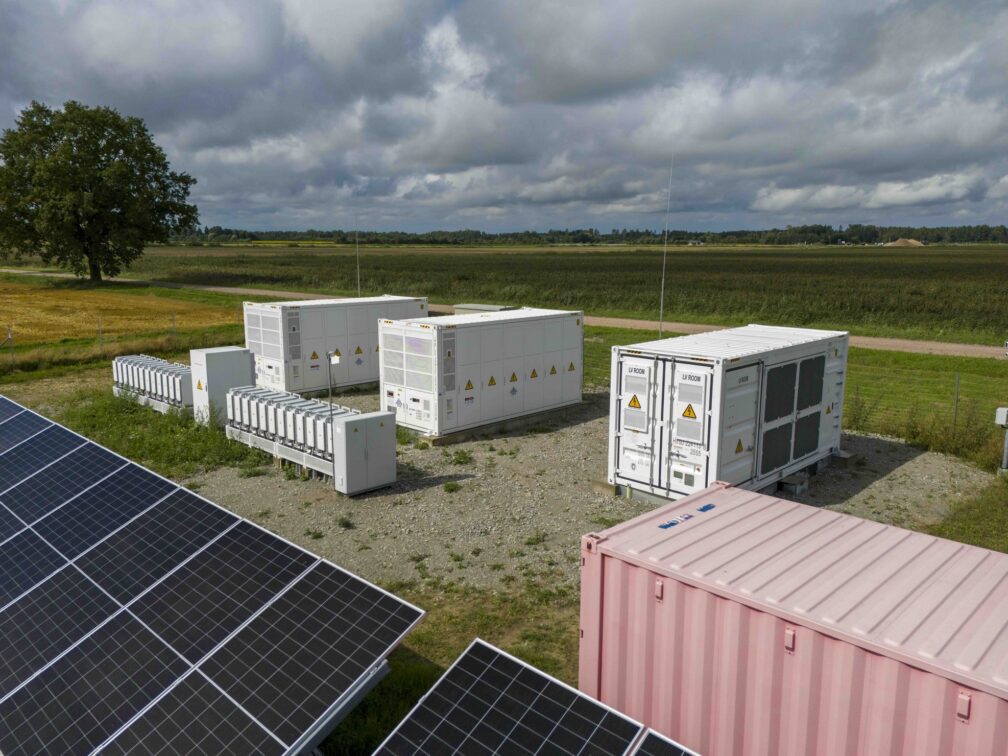
Biometāna rūpnīca Igaunijā
The biomethane produced at the new plant will be sold on the market by “Elenger,” a company in the “Infortar” group and the largest gas trader in Finland and the Baltics. “Elenger” will purchase all of the biomethane produced at the plant, deliver it to the distribution network, and offer it to end consumers.
“The development of green gas production in the Baltics is an important step in strengthening the energy independence of the entire region. Although the new plant is located in Estonia, its impact extends beyond national borders – the Baltic gas market is interconnected, and a larger volume of locally produced renewable gas means greater supply security and less dependence on imported energy resources, including for our customers in Latvia. This will allow us to offer an increasing range of sustainable energy solutions, both for companies focused on reducing CO₂ emissions and for private customers, to whom we will in the future be able to offer the choice of more environmentally friendly energy products,” says Dāvis Skulte, Chairman of the Management Board of SIA “Elenger.”

Biometāna rūpnīca Igaunijā
“Demand for certified biomethane in the Baltics continues to grow. Companies in the industrial, transport, and services sectors are especially active in this area, looking for practical ways to reduce emissions and meet their sustainability goals without making significant investments in new infrastructure or changing technology. This is also confirmed by the first commercial biomethane supply deal in Latvia, concluded last year by ‘Elenger.’ Specifically, we provided biomethane supply and sales to ‘Schneider Electric Latvija,’ which leases office space in a building owned by ‘BLRT Invest Latvia,'” adds D. Skulte.
As Ains Hanšmits, Chairman of the Management Board of “Infortar,” notes, Estonia is a dairy farming country, and it is increasingly becoming a gas producer as well: “If we managed to triple or quadruple the number of dairy cows, we would be able to fully cover Estonia’s entire gas consumption. The development of green gas production would strengthen both energy and food security, while also helping to address environmental challenges both in rural areas and in cities.”
The €15 million plant was built next to the “Halinga OÜ” dairy farm in the village of Halinga, one of the largest milk producers in Estonia. The company’s herd numbers more than 3,000 head of cattle, and the agricultural land it manages covers 4,500 hectares. “Infortar” acquired a 51% stake in the company in spring 2024.
Construction of the biomethane plant was carried out by “INF Ehitus,” while the technological solution was provided by one of Germany’s largest biomethane producers, “EnviTec Anlagenbau GmbH & Co. KG.” The project was financed with support from “SEB bank” and funds from the European Union’s “NextGenerationEU” Recovery and Resilience Facility program.